
Understanding the Collision Repair Process
After a collision, knowing what happens next can make the repair process easier to navigate. Modern vehicle repair involves more than addressing visible damage. It requires a structured approach that includes thorough damage assessment, safety system considerations, and manufacturer-defined procedures to return your vehicle to proper working condition.
FIRST STEPS
AFTER A COLLISION
Following a collision, your first priority is safety. Once the situation is stable, the next step is documenting the damage and preparing to begin the repair process.
You may choose to contact your insurance carrier to open a claim or work with the other party’s insurance provider, depending on how the incident occurred. An adjuster may be involved to review the damage and coordinate the approval process. While insurance is part of the process, repair decisions and how your vehicle is restored involve additional steps beyond the initial estimate.
You have the right to choose where your vehicle is repaired. That decision directly affects how the repair is performed, the procedures that are followed, and how your vehicle is restored after a collision.
Choosing a Repair Facility
When evaluating a repair facility, consider whether they:
These factors help determine whether your vehicle’s structure, alignment, and safety system functionality are properly restored.
ASSESSMENT & PLANNING
Repair Planning
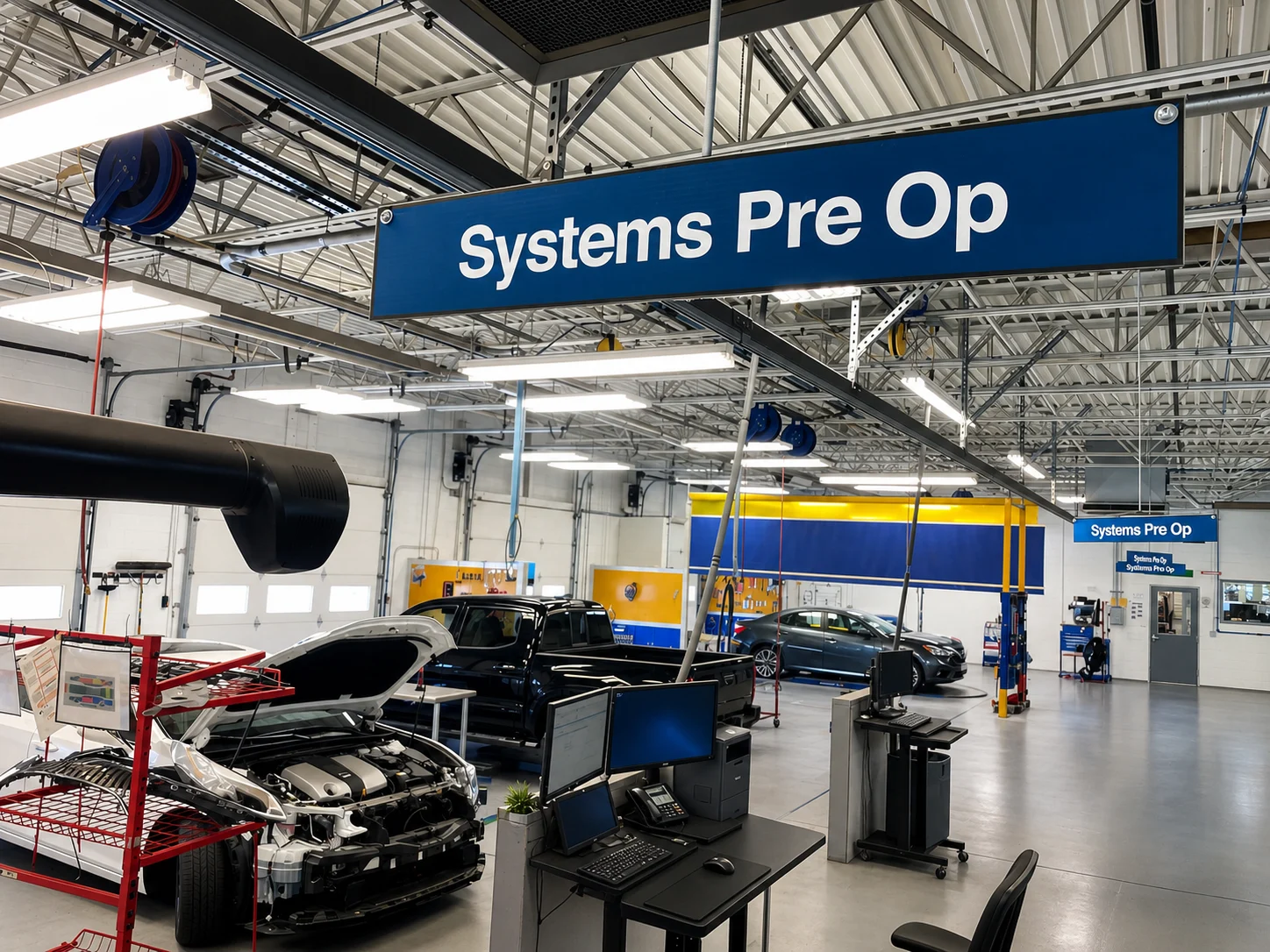
The repair process begins with an initial estimate, but damage often extends beyond what is visible. As the vehicle is inspected more thoroughly, the repair plan is developed to reflect the full scope of work required.
Initial Estimate & Hidden Damage
The initial estimate is based on a visual inspection of damage. However, collision damage often extends beyond exterior components. Once disassembly begins, technicians can identify additional issues such as structural misalignment, suspension damage, or safety system involvement that were not visible during the initial assessment.
Repair Plan Development
As additional damage is identified, the repair plan is updated so all required repairs are documented before work continues.
Before repairs begin, technicians reference manufacturer repair procedures specific to your vehicle. These procedures define how repairs are performed and what steps are required to restore the vehicle properly.
Parts & Repair Considerations
The repair estimate includes parts, labor, materials, and required procedures. In many cases, parts are selected based on manufacturer specifications to support proper fit, structural performance, and system integration.
Depending on the repair and insurance coverage, different part types may be considered, which can influence how the repair is completed.
Modern repair planning also includes diagnostic scanning, safety system calibration, and post-repair verification required for today’s vehicles.
WORKING WITH INSURANCE
Insurance Coordination
As part of the repair process, an insurance provider may review the damage and determine what is covered under a policy. An adjuster may prepare an initial estimate based on visible damage and begin coordinating the claim.
It is common for the insurance estimate and the repair facility’s assessment to differ. This is often due to damage that cannot be identified until disassembly begins.
When additional damage is discovered, such as structural issues, suspension damage, or safety system components requiring replacement, the repair facility documents these findings and submits a supplement to the insurance carrier. Supplements request approval for the additional work needed to complete the repair properly.
The supplement process can affect repair timelines while the insurance provider reviews documentation and updates the claim. Repair facilities help manage this process, but coverage decisions and approvals are determined by the insurance provider based on the policy.
REPAIR EXECUTION
Our Collision Repair Process
1. Vehicle Intake & Initial Preparation
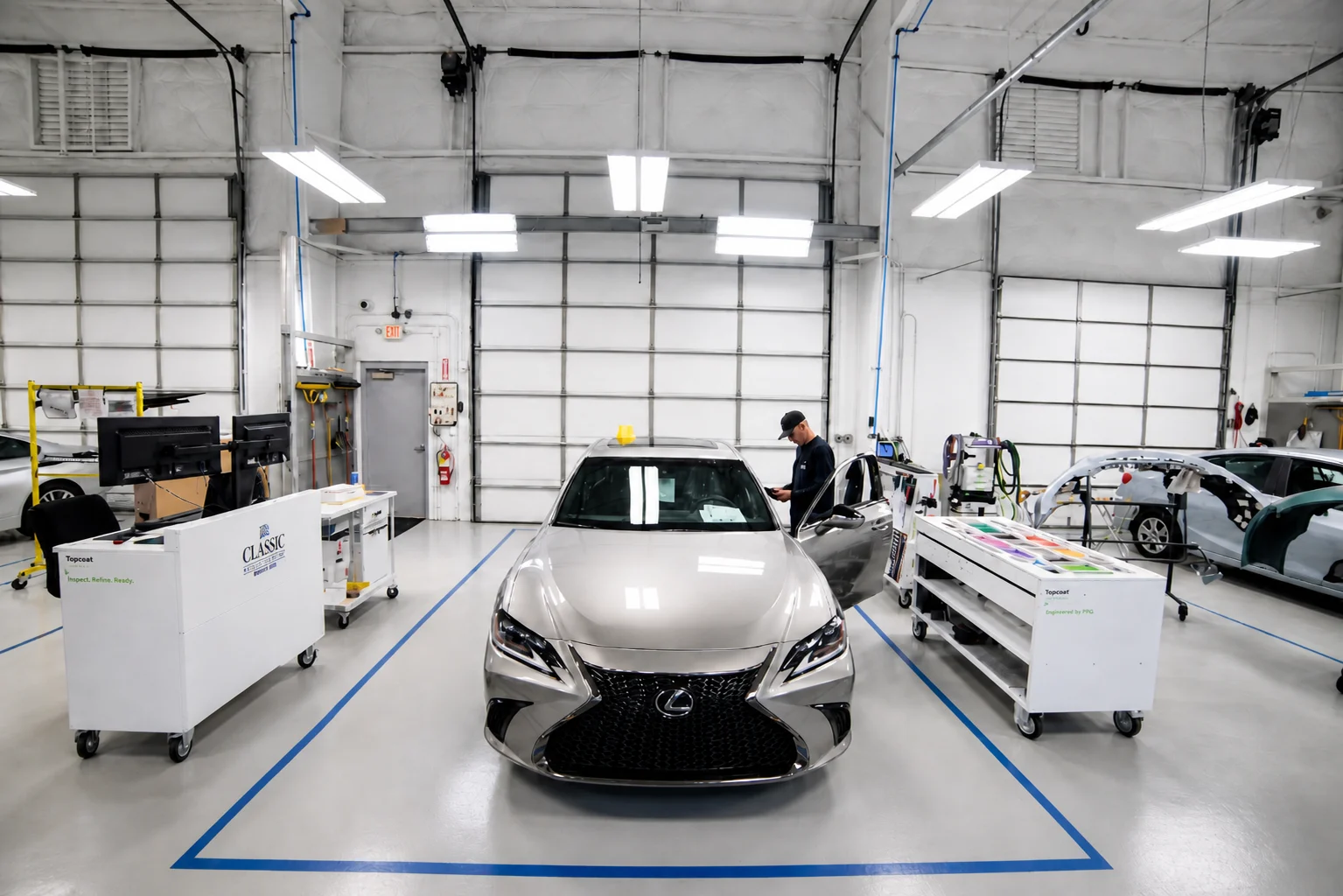
Your vehicle is received, documented, and prepared for repair. This includes initial inspection, cleaning, and basic system checks before a full evaluation.
2. Disassembly & Damage Assessment
Components are removed to expose underlying damage not visible during inspection. This allows technicians to identify additional issues and complete a full repair plan.
3. Structural & Body Repair Process
The vehicle’s structure and exterior components are repaired using manufacturer procedures. This step restores proper alignment and overall structural integrity.
4. Surface Preparation & Refinishing
Repaired areas are prepared and refinished using approved materials and color matching. This restores appearance while maintaining surface protection.
5. Component Reassembly & Integration
Components are reinstalled and systems are reconnected following manufacturer procedures. This ensures proper fit, function, and integration throughout the vehicle.
6. Final Inspection & System Verification
A comprehensive inspection verifies repair quality, system operation, and overall condition. Diagnostic scanning and calibration are completed where required.
SAFETY SYSTEM VERIFICATION
ADAS & Safety Systems
Modern vehicles rely on advanced safety systems that require precise calibration and verification after collision repair.
Advanced Driver Assistance Systems (ADAS) rely on cameras and sensors positioned throughout the vehicle. Collision damage can affect sensor alignment and mounting points, even when components appear undamaged. Changes in position can impact how these systems function.
After structural and body repair, ADAS components may require calibration using manufacturer-specified equipment and procedures. Calibration helps ensure that features such as forward collision warning, lane departure assistance, adaptive cruise control, and automatic emergency braking operate as intended.
Post-repair diagnostic scanning identifies fault codes and verifies system operation, including airbag systems, seatbelt pretensioners, and stability control. These checks help confirm that safety systems are functioning properly before the vehicle is returned.
Safety system calibration and verification are critical steps in restoring modern vehicle performance after a collision.
REPAIR EXPECTATIONS
Timelines, Transportation & Delivery
Repair Timelines
Repair timelines vary based on the extent of damage, parts availability, and required procedures. Minor repairs may take a few days, while more complex repairs may take longer to complete.
Parts availability can impact repair duration. Timelines may also adjust if additional damage is discovered during disassembly and requires approval before work continues.
Transportation Options
During the repair process, you may need alternate transportation depending on the repair duration. Some insurance policies include rental vehicle coverage, with terms based on your specific policy.
Rental arrangements may be coordinated before repairs begin, depending on availability, individual needs, and repair scheduling. Rental agreements and billing are handled directly between you and the rental provider.
Final Inspection & Delivery
Before your vehicle is returned, a final inspection is completed to verify repair quality, system operation, and overall condition. Diagnostic scanning and system verification help ensure that safety systems are functioning properly.
At pickup, the repair process is reviewed with you and documentation is provided outlining the work performed and confirming all completed repairs.